
Conversations about a new website often start with assumptions that sound reasonable but leave part of the picture out. Here are seven of them, and what they mean for the everyday work of a business.
Myth 1: I have social media, so I do not need a website
Social media helps you reach people and stay in touch. It is worth remembering, though, that the platform owner sets the rules. Algorithm changes, account restrictions and outages can affect your access to an audience.
Your own website gives you more control over your content, your offer and the path to contact. You can organise information, show your work and explain how you work without fitting everything into a post.
Social media and a website complement each other. One helps start the conversation; the other gives a customer space to understand your business and take the next step.

Myth 2: Building a website is just a few clicks
Building your own website is possible. Ready-made tools make it easier to get started, especially with simple requirements. Launching a template does not answer every question, however.
How should you organise the offer? What should a customer see first? Where will they look for contact details? How will they use a form on their phone? These are design decisions, whatever technology you choose.
There are technical considerations too:
- a clear structure for content and URLs;
- image and loading-time optimisation;
- appropriate configuration, updates and form protection;
- testing across screens and with a keyboard.
The amount of work depends on the purpose of the website. Sometimes a simple solution is enough. Sometimes it takes a custom design and connections to other business tools.

Myth 3: Responsive design is an optional extra
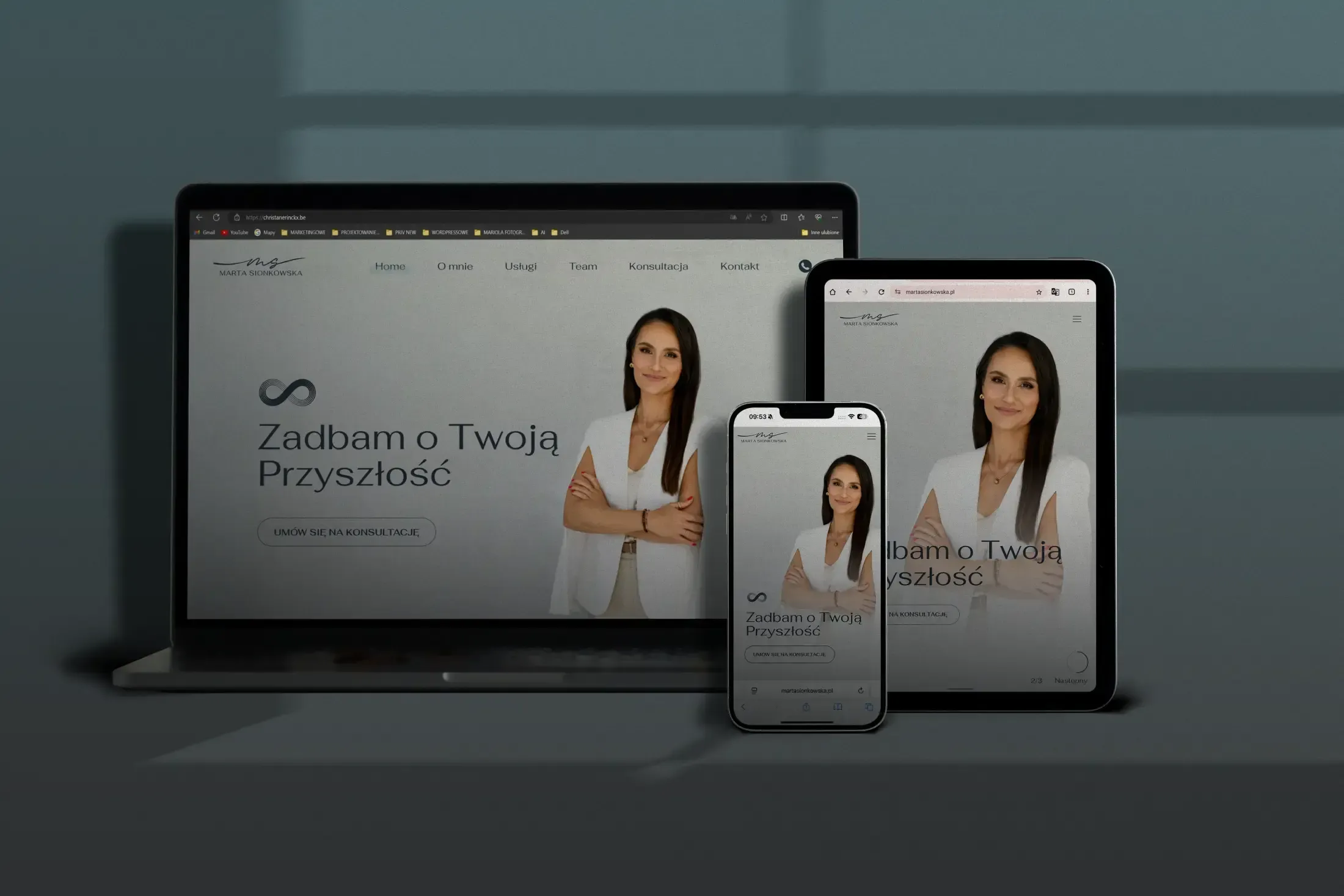
A customer might visit on a phone, a laptop or a large monitor. Every screen needs a readable layout and controls that are easy to use.
Phones quickly reveal problems that are easy to overlook on a desktop:
- text that needs zooming in;
- buttons that are too small or too close together;
- a form that is difficult to complete;
- images that slow down loading;
- animations that get in the way of the content.
A good mobile version may need a different order of elements or simpler motion. Shrinking the entire desktop design is not enough.
Myth 4: If something is wrong, a customer will tell me
Some people will report a problem. Others will close the page and look elsewhere. A lack of complaints does not prove that everything works.
It is worth checking the main journeys regularly: find a service, open a project, complete a form and confirm that the message arrives. Try it on a phone and in another browser too.
Testing and carefully chosen analytics tools can help. They should respect users’ privacy and serve the needs of the business. A report is useful, but it cannot replace a person checking the experience.

Myth 5: My industry does not need a website
Not every business needs a large website. It is still worth looking at how its customers find information and what they need to know before getting in touch.
Even when work comes through referrals, a website can confirm what the business does, where it operates and the experience behind it. A few well-prepared pages may be enough.
Instead of starting with “we need a big website”, ask what it should make easier. Explaining a service, booking a meeting, choosing a product or gathering the information needed for a quote?

Myth 6: Only speed matters; design comes second
Speed and design serve different needs. A website should load promptly, but visitors still need to understand the content, find information and trust the business.
Readable typography, a clear hierarchy and images that fit the company help people use the site. Heavy animations or large, unprepared files can get in their way.
There is no need to choose between design and speed. Choose the right approach, prepare the images, limit unnecessary code and test the result on different devices.
Myth 7: SEO is something you finish at launch
Preparing a website for indexing, organising headings and descriptions, and setting up its technical foundations are a good start. They do not mean the work on visibility is complete.
Further work may include developing content, studying customer questions, improving the structure and reviewing results. The scope depends on the industry, the competition and the goals of the business.
Be clear about what website development includes and what requires separate, ongoing work. Then everyone knows what to expect after launch.
Where should you start?
With a purpose. A good website should make specific tasks easier for your customers and your business. The technology, content and design should follow that need.
If you would like to review your existing website or plan a new one, let’s talk.